Ten people is easy; past twenty it becomes logistics: who goes with whom, at which address, and what the rest do while the first group plays. Here is the room maths, two schedules and the prices.
Team building for 10 to 30 people: how many rooms
The maths is simple: one room per four or five people. Not because more will not fit, but because in a team of seven two people spend the hour standing behind everyone else.
- 10 people — two rooms. Any of the three addresses works.
- 15 people — three rooms. Meierovica bulvāris 14 or Jeruzalemes iela 2/4.
- 20 people — four rooms. That leaves one address: Meierovica bulvāris 14 takes up to 22 players in a single slot.
- 30 people — either two addresses at once, or one address across two consecutive slots.
Nine rooms at three addresses hold 48 players in one slot. In practice a large team runs into a different limit first: everyone has to be in the same place in the same hour.
For a team of twenty
Four rooms at one address, one time slot
- Meierovica bulvāris 14 has four rooms, up to 22 players in total
- On a weekday before 18:00 that is 240 €, or 12 € a head
- Book three rooms or more at once and you can get an individual offer
Two schedules: one wave or two
One wave works up to 22 people. Everyone plays at the same time, everyone is free an hour later, and the evening continues together. The simplest version when the team fits one address.
Two waves start being necessary from 22 people. The first group plays at 18:00, the second at 19:15, with half an hour of overlap. There is one critical question here: what the waiting group does.
- Book a table nearby for the whole evening, not just for the end of it.
- The first wave moves to the table after their game; the second joins after theirs.
- Do not gather everyone in one lobby at the start: twenty people in a hallway means nobody hears the briefing.
The third option people forget: two addresses in the same hour. It needs two people in charge, one at each, and it saves a full hour.
What it costs
The price is per room rather than per person, so team size turns into a number of rooms.
- Monday to Thursday before 18:00: 60 € per room. The last game starts at 17:00.
- Monday to Thursday after 18:00, and Friday: 80 €.
- Weekends and public holidays: 100 €.
- Five players included; each additional player is 10 €.
Twenty people on a weekday afternoon is four rooms for 240 €, or 12 € each. The same team on a Friday evening pays 320 €. For thirty people it is 360 € and 480 €, and at that size booking three rooms or more at once can get you an individual offer.
How to split people into teams
The split decides whether the day changes anything. Prepare the line-ups in advance rather than on the spot: "split however you like" means people stand with whoever they eat lunch with every day.
- Mix the departments. At least two different everyday teams in every room.
- Managers away from their own reports. With no boss in the room, everyone else starts deciding.
- Spread new hires across rooms. It is the fastest way for them to meet people outside their own department.
- Four or five per room. At six and seven, spectators appear.
If some people have played before, spread them out too: one experienced player per team helps, while three in one room means the rest are watching.
The organiser's list
Six things to settle before the call, and the booking itself takes five minutes.
- The exact head count. It sets the rooms, the address and the price.
- Date and time. The price changes at 18:00 and again at 22:00.
- One wave or two. Above 22 people there is no choice.
- Age limits. The Experiment and House of Mysteries are 16+.
- Somewhere to wait and eat. Book the table for after the last wave ends.
- Who runs the day on site. One person with the list of who plays in which room.
On choosing a format and what to ask of it, there is the team building piece, and a separate page for the December party with prices and a schedule.
Which rooms to take for a large group
Within one address the rooms differ in capacity and age limit, and that shapes how you split people.
- Meierovica bulvāris 14: Sherlock Holmes takes up to 7 players; Harry Potter, James Bond and Journey to Soviet Riga take up to 5. Twenty-two seats in total.
- Jeruzalemes iela 2/4: Time Machine, Captain's Cabin and The Experiment, fifteen seats in total. The Experiment is 16+.
- Miera iela 61: The Bunker and House of Mysteries, eleven seats. House of Mysteries is the hardest room and 16+.
For a large team, give the hardest room to the people who have played before and the medium rooms to everyone else. If all teams start at the same time, uneven difficulty is not a problem: you compare how far each team got, not the seconds.
If somebody does not want to play
In a group of twenty there is always one or two who dislike a closed room. Handle it beforehand rather than on the day.
- Ask on the form where people confirm attendance, not publicly at the event.
- Offer a role outside the room: photos, timekeeping, holding the restaurant table.
- The door does not lock anyone in: you can leave the room at any moment, and it is worth saying so up front.
Two weeks before the event
For a large group a booking alone is not enough. This countdown removes most of the questions that otherwise land on the last day.
- Two weeks out. Book the rooms and the table. In December do it earlier, because evening slots go first.
- One week out. Collect confirmations with a form asking one thing: are you coming. Use the same form to ask about age limits and about anyone who would rather not play.
- Two days out. Fix the head count and assign teams to rooms. Send the list round rather than reading it aloud on the day.
- On the day. A reminder with the address and "arrive ten minutes early". The booked time is when the game starts.
If the team is spread across two addresses, each needs its own person with their own list. That is the only piece of duplication actually worth having.
Questions organisers ask
How many people can play at once?
Up to 22 at one address (Meierovica bulvāris 14, four rooms) and up to 48 across all three.
How long should I allow for a team of 30?
About two and a half hours across two waves: first game, second game and a group photo. Book the table for after the second wave.
What does team building for 20 cost?
Four rooms: 240 € on a weekday before 18:00, or 320 € on a Friday evening. That is 12 to 16 € a head.
Does everyone have to play at the same address?
No. A large team can take two addresses in the same slot, but then each place needs its own person in charge.
Are there terms for companies?
Book three rooms or more at once and you can get an individual offer. Details are on the corporate events page.
Start with the head count and the date: those two numbers decide the number of rooms, the address, and whether you need a second wave.
Pick a room and book
These rooms suit this story. Choose one and book your adventure.
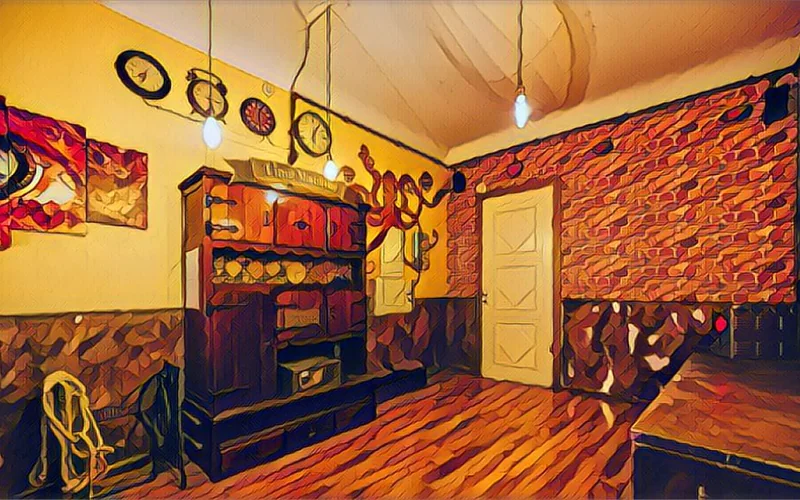
A futuristic laboratory where every gear and light could be the key to the future.
Time Machine
2-5 · 60 min · 6+
BOOK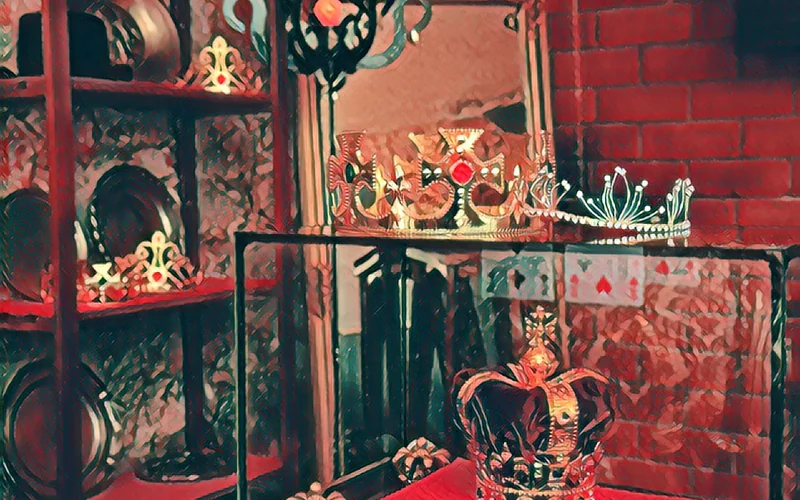
A dark, candlelit study. A classic Victorian-era room for masters of deduction.
Sherlock Holmes
2-7 · 60 min · 7+
BOOK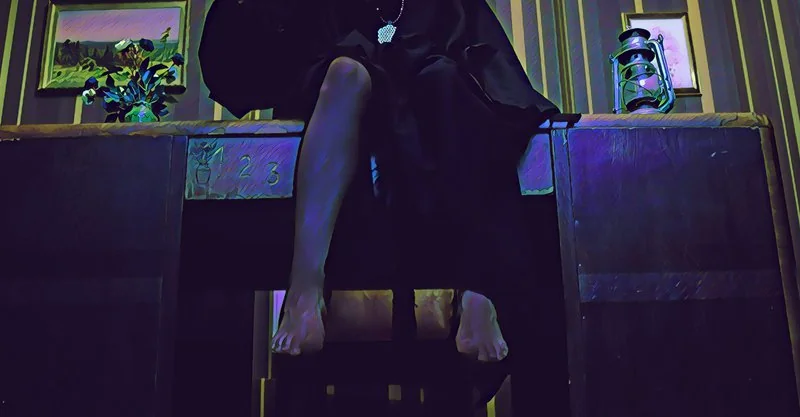
An abandoned house with a dark past. No one knows where its inhabitants disappeared. Will you dare to enter?
House of Mysteries
2-6 · 60 min · 16+
BOOK